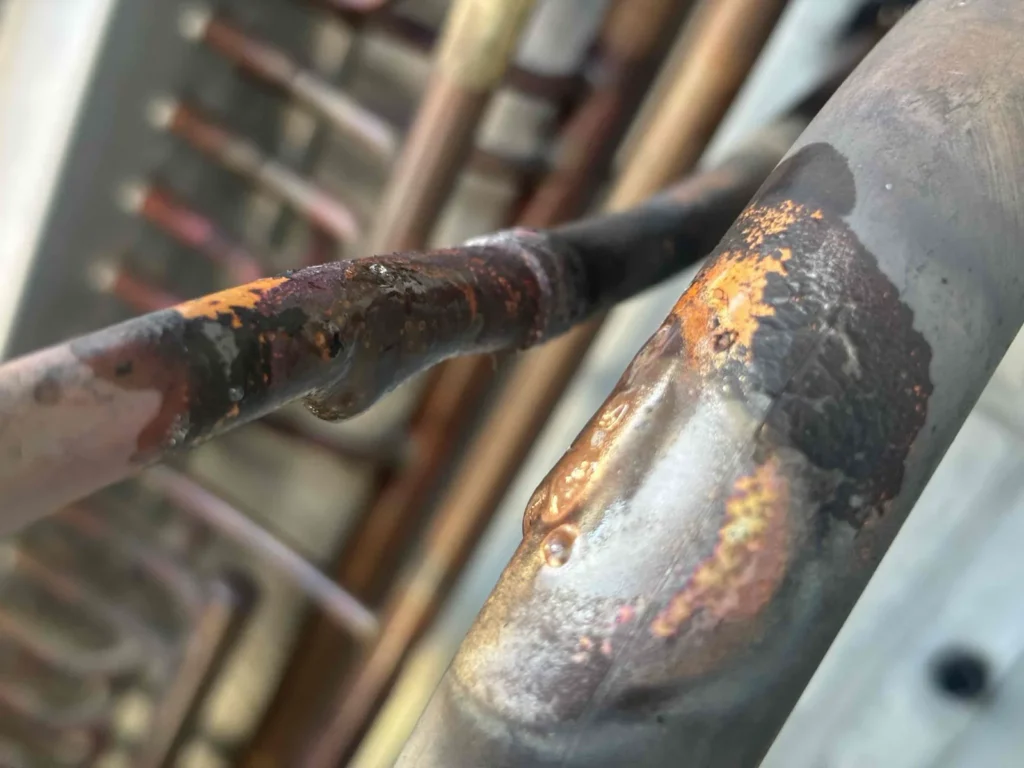
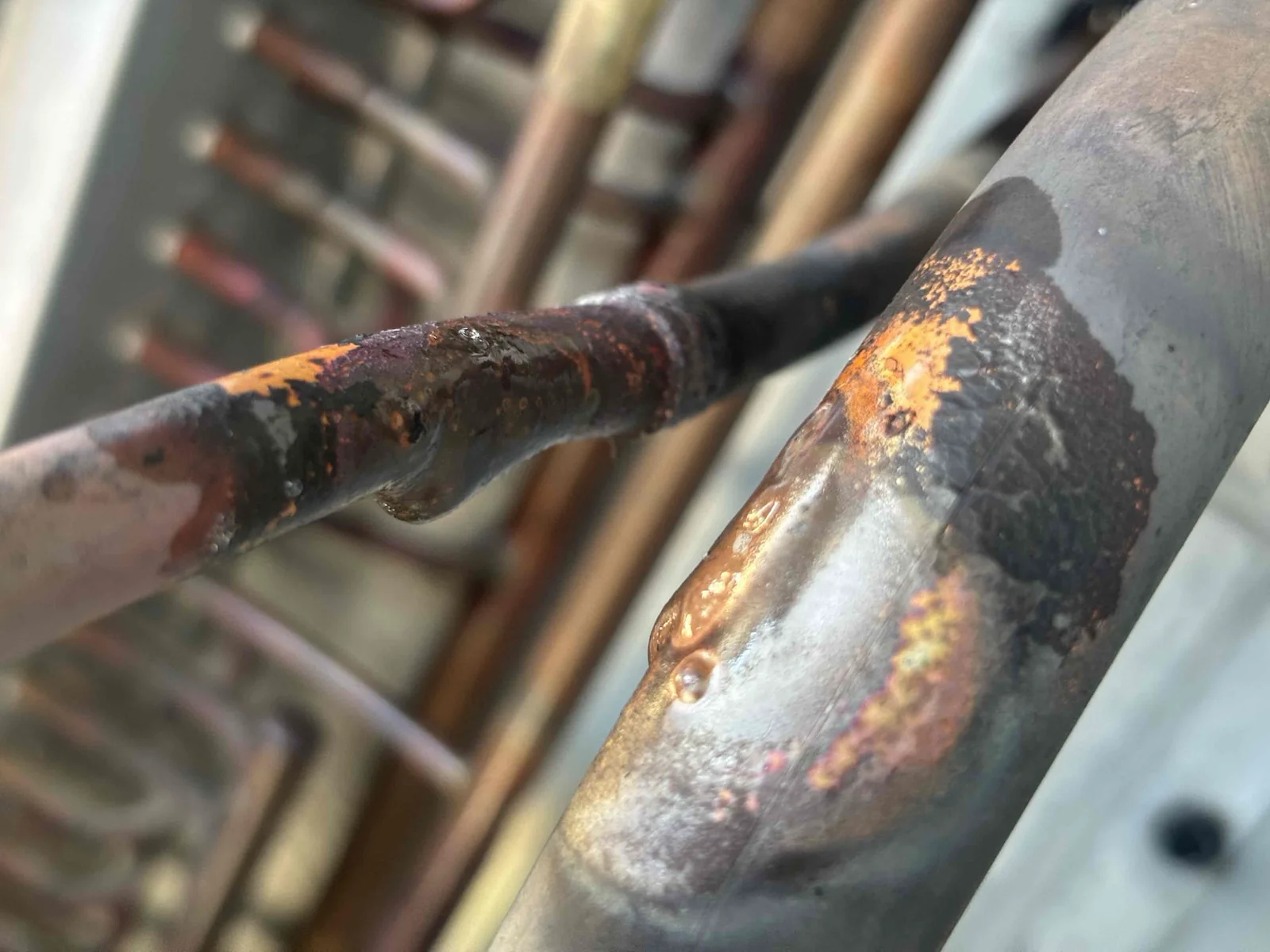
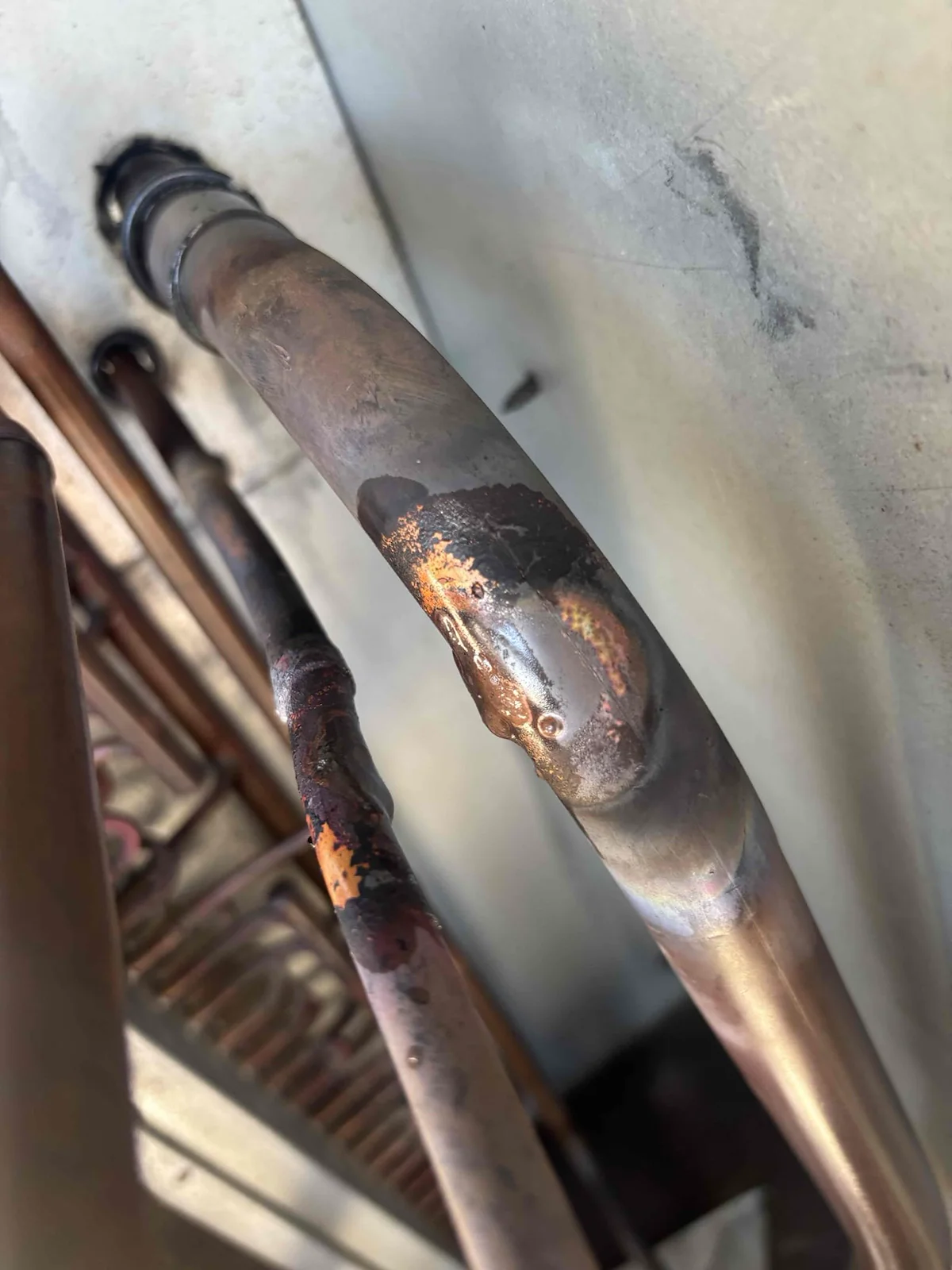
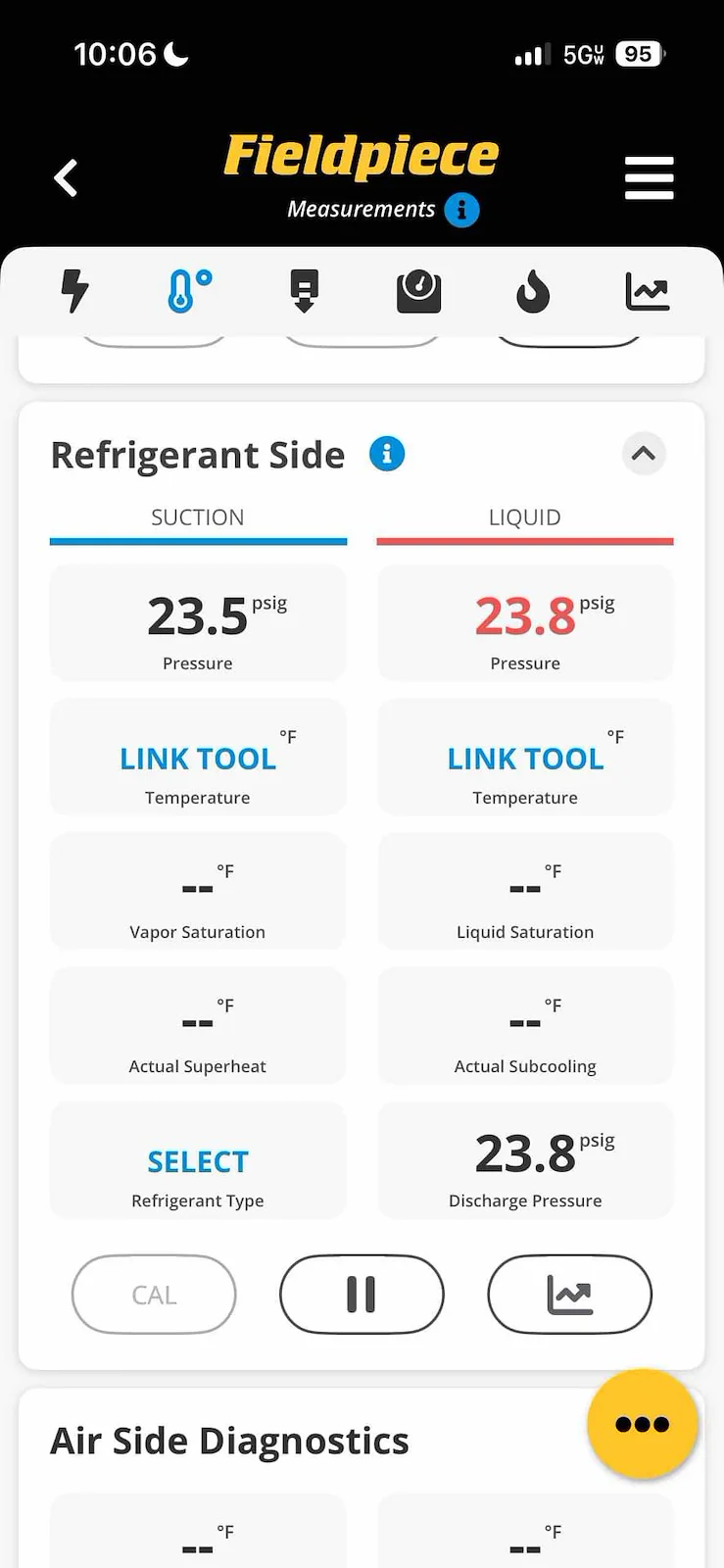
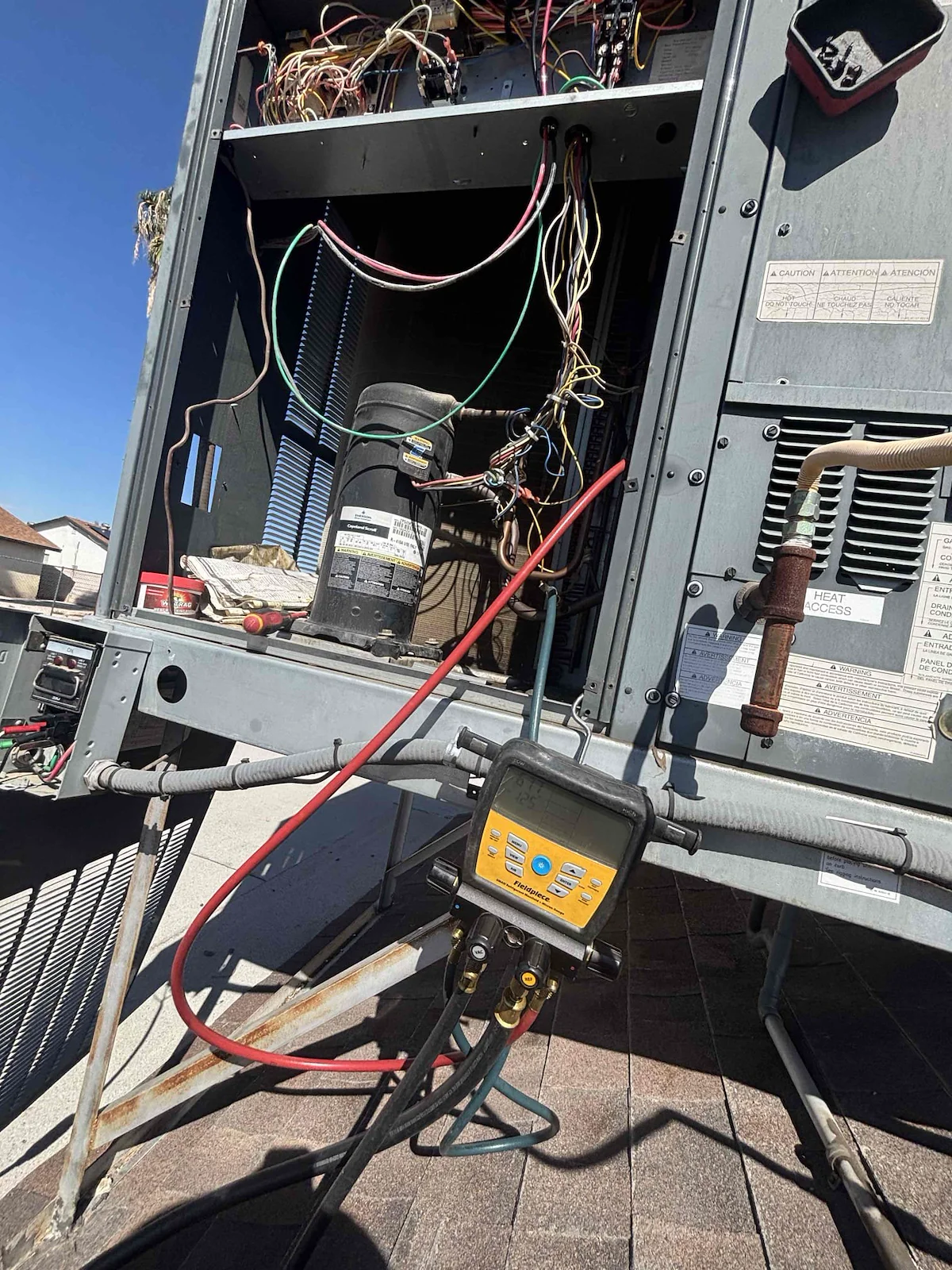
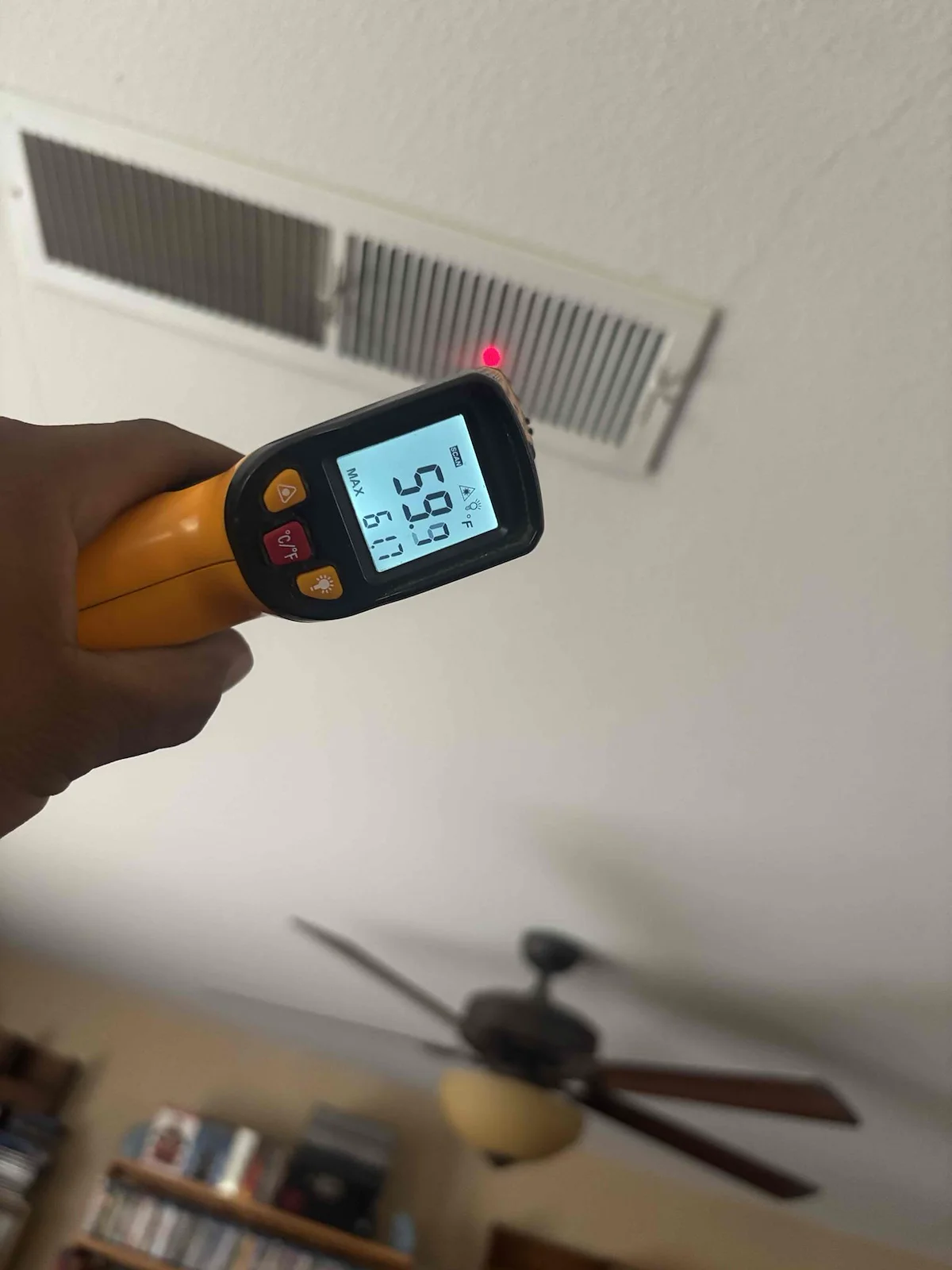
The leak was sealed where the lines had rubbed through, and a supply register read just under 60 degrees with the system running.
Is a hissing AC dangerous?
The bigger risk is to the equipment. A system that keeps running while it leaks loses cooling and can overheat the compressor, which is the most expensive part to replace. Turn it off at the thermostat and call for emergency AC repair if the house is heating up. Leave fittings and valves alone; refrigerant can cause frostbite.
What else can make an AC hiss?
Air escaping from a leaky duct joint or around a loose filter door can hiss or whistle. A loud, high-pitched shriek from the outdoor unit can mean dangerously high pressure inside the compressor, so shut the system off right away. Our leak repair vs. replace write-up covers what happens once a refrigerant leak is confirmed.
Why did the lines rub?
Lines that aren’t clamped or spaced apart vibrate every time the compressor starts and stops. Over the years, that rubbing wears through the copper. An AC tune-up is a good time to look for lines touching each other or the cabinet.